What is par in golf? Par is the standard number of strokes that an expert golfer is expected to take to complete a hole or course. Understanding par helps players gauge their performance and set realistic goals.
Each hole on a golf course has its own par, typically ranging from 3 to 5 strokes. For example, if a player completes a par 4 hole in 5 strokes, they are considered to have a bogey on that hole.
Par is a fundamental concept in golf that you’ll encounter often. Understanding what par means can significantly enhance your appreciation of the game.

The Definition of Par in Golf
Par refers to the number of strokes an expert golfer is expected to take to complete a hole or an entire course. It serves as a benchmark for skill level and scoring.
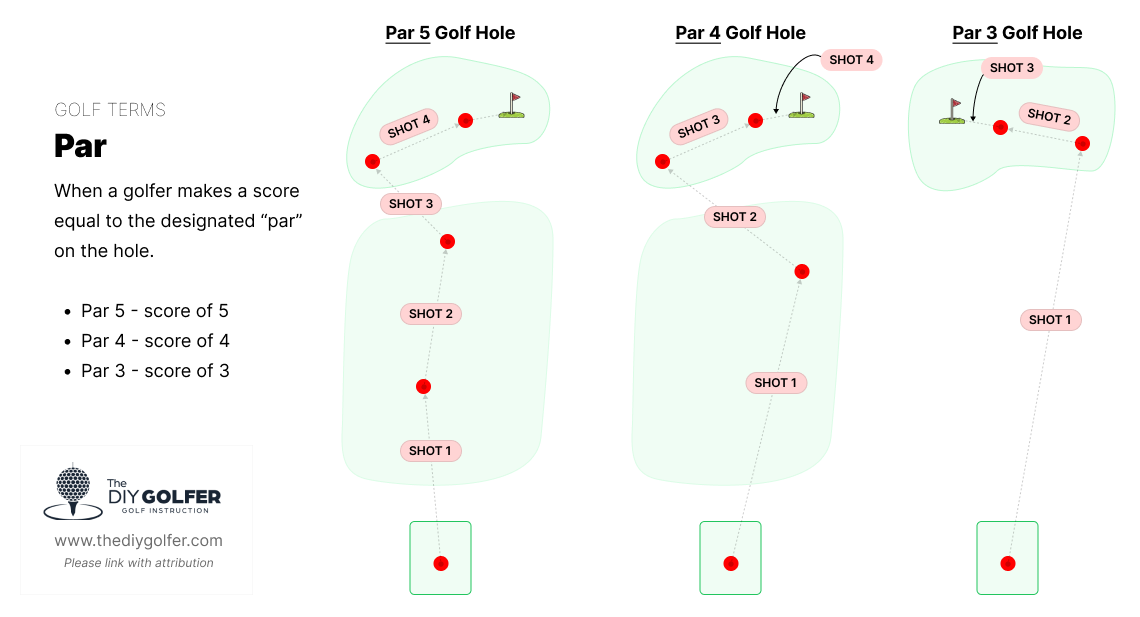
Par is determined based on the length and difficulty of each hole. Typically, a par-3 hole is shorter, while a par-5 hole is longer and more challenging. The total par for an 18-hole course usually ranges from 70 to 72 strokes.
Understanding par is crucial for golf scoring. When you play, your goal is to complete the course in as few strokes as possible. If you finish a hole in fewer strokes than par, you’re under par, which is a good thing! For example, if you take four strokes on a par-3 hole, you’re one over par.
For many golfers, tracking their score relative to par adds excitement to the game. It gives you a clear target and helps you measure your progress over time. Whether you’re a newbie or a seasoned player, being aware of par can make your rounds more enjoyable.
Next time you’re out on the course, keep an eye on the par for each hole. It’ll help you set realistic goals and improve your overall game. Happy golfing!
Understanding par in golf can enhance your appreciation of the game. Knowing how par works for both individual holes and the overall course helps you track your performance and set realistic goals.
Types of Par: Hole and Course
There are two main types of par you’ll encounter on the golf course: the par for individual holes and the total par for the entire course. Each plays a crucial role in how players assess their game.
First, let’s talk about par for individual holes. Each hole on a golf course has its own par, which reflects the number of strokes an expert golfer is expected to take to complete it. Holes can typically be categorized as par 3, par 4, or par 5, depending on their length and difficulty. For example, a par 3 hole is usually shorter, requiring just one good shot to reach the green and then two putts to complete the hole.
Next up is the total par for a golf course. This is simply the sum of all the individual hole pars. Most golf courses have a par that ranges from 70 to 72, though this can vary. A typical 18-hole layout might feature a mix of par 3, 4, and 5 holes, which adds to the overall challenge and strategy of the game.
Variations in par can be quite interesting too. Different courses have different designs, which means their par values can change significantly. For instance, a links course might have a higher par due to its longer holes and tricky wind conditions, while a more wooded course might be shorter and have a lower total par.
When you play a new course, take a moment to familiarize yourself with its par ratings. This can give you a solid benchmark for your performance and help you strategize your shots better. Knowing “What is par in golf?” is just the first step; understanding how it applies on the course will really elevate your game.
Par plays a crucial role in how you score in golf. Understanding this concept can help you gauge your performance on the course and set realistic goals for improvement.

How Par Affects Scoring
Par represents the number of strokes an expert golfer is expected to take to complete a hole or a course. Your score relative to par gives insight into how well you’re playing.
When you score below par, it means you’re playing well. For instance, if you finish a par 4 hole in just 3 strokes, you’ve made a birdie. This not only boosts your confidence but also enhances your overall score, helping you compete better in tournaments.
On the flip side, scoring above par can be frustrating. If you take 5 strokes on that same par 4 hole, you’ve made a bogey. A few bogeys can add up quickly, impacting your total score for the round. This is why managing your game is vital; one bad hole can set you back.
Understanding Birdies and Bogeys
Birdies and bogeys are terms that specifically relate to scoring in relation to par. A birdie is when you score one stroke under par, while a bogey is one stroke over. These terms help you understand your performance at a glance.
For example, if you’re on a par 3 hole and you ace it in just 2 strokes, that’s a birdie! Conversely, if you hit it in 4 strokes, that’s a bogey. Keeping track of these can help you see where you shine and where you might need to improve.
As you play more, consider keeping a scorecard that highlights your birdies and bogeys. This not only makes the game more enjoyable but also aids in tracking your progress. You’ll be surprised how small changes can lead to better scores over time.
Playing to par can elevate your game and enhance your overall experience on the course. With the right strategies, you can make smarter decisions and improve your scores. Let’s dive into some practical tips to help you achieve that elusive par.
Strategies to Play to Par
Understanding how to manage your game can be the difference between a good round and a great one. By focusing on course management, weighing risks against rewards, and practicing specific shots, you’ll set yourself up for success on the greens.
Course management is all about making smart decisions based on your strengths and the layout of the course. Before each round, study the scorecard and get a feel for the layout. Identify which holes play to your strengths and which ones might require a more cautious approach. For instance, if you’re not confident with your driver on a particular hole, consider using a fairway wood or even an iron off the tee. This can help you avoid tricky hazards and set you up for a better approach shot.
Next, understanding risk versus reward is crucial. Every shot presents an opportunity, but some come with higher stakes. For example, if you’re faced with a narrow fairway that leads to a challenging green, assess if going for it is worth the risk. Sometimes, laying up to a safer spot can lead to an easier approach and a better chance at making par. Remember, it’s not always about being aggressive; sometimes, playing it safe pays off.
Practicing Specific Shots
To play to par consistently, you’ll want to practice specific shots that you might encounter on the course. Focus on your short game, as this can significantly lower your scores. Spend time around the greens, working on chip shots and putts from various distances. The more comfortable you are in these situations, the more confident you’ll feel during your rounds.
Additionally, consider simulating pressure situations during practice. For example, challenge yourself to make a certain number of putts in a row from various locations on the green. This not only sharpens your skills but also builds mental toughness for when you’re out on the course.
Remember, playing to par is about making smart decisions and honing your skills. With each round, focus on course management, assess your risk, and practice those pivotal shots. You’ll find that understanding “What is par in golf?” will take on new meaning as you consistently aim for it.
When you step onto the golf course, understanding the different scoring terms can enhance your game. Knowing what par is and how it relates to other scores can give you a clearer picture of your performance. Let’s break down some key terms that you’ll encounter.
Par vs. Other Scoring Terms
Par is a fundamental concept in golf, but it’s just one part of the scoring puzzle. To fully grasp your game, you need to understand how par compares to terms like eagle, birdie, and bogey, as well as the differences between stroke play and match play.
First, let’s clarify some common scoring terms:
- Eagle: This means you completed the hole two strokes under par. For instance, if a hole is a par 4, making it in just 2 strokes is an eagle.
- Birdie: A birdie is one stroke under par. So, if you finish a par 3 hole in just 2 strokes, that’s a birdie.
- Bogey: A bogey occurs when you finish a hole one stroke over par. If you take 5 strokes on a par 4 hole, you’ve made a bogey.
Now, let’s dive into the difference between stroke play and match play. In stroke play, every stroke counts toward your total score over the course of the entire round. It’s all about minimizing your total strokes. On the other hand, match play focuses on winning individual holes. You can win a match even if your total strokes are higher than your opponent’s overall score, as long as you win more holes.
Understanding par also involves knowing about scratch and handicap golfers. A scratch golfer is someone who can play to par on any course. They’re typically very skilled and consistent. Meanwhile, a golfer with a handicap has a numerical value assigned to their skill level, which allows them to compete fairly with those who are more skilled. Essentially, the handicap adjusts your potential score to make the game more enjoyable for everyone.
For example, let’s say you’re playing a round with friends: if one player is a scratch golfer and another has a 10 handicap, the latter can add 10 strokes to their par score to make the game more competitive. This way, everyone can enjoy the challenge, regardless of skill level.
Understanding these scoring terms will make your golf experience more enjoyable. The next time you’re out on the course, you’ll have a better grasp of what’s happening and can focus on improving your game.
Par plays a crucial role in golf tournaments, helping to establish the framework for competition. Understanding how par is utilized can enhance your grasp of the game and its strategies.
The Role of Par in Golf Tournaments
In golf tournaments, par serves as a standard against which players gauge their performance. It sets the stage for competition, giving everyone a clear target to aim for on each hole.
When you hear the term “par,” think of it as the expected number of strokes a skilled golfer should take to complete a hole. This benchmark is vital during tournaments, as it determines how players are ranked. If you shoot below par, you’re doing great; if you’re above, you might need to rethink your strategy.
For example, let’s say you’re competing in a local tournament where the course par is 72. If you finish with a score of 70, you’re two strokes under par, which typically puts you in a strong position against your fellow competitors. Your performance relative to par can influence not just your standing but also how you approach the next holes.
Impact on Player Performance and Ranking
Par influences player performance by setting expectations. Players often train to improve their game to meet or exceed par. This competitive edge drives golfers to refine their skills in putting, driving, and overall strategy.
Moreover, tournaments often use par as a tie-breaking method. If two players finish with the same score, the one with the better performance against par might take the lead. This adds another layer of excitement and tension to the competition.
So next time you’re on the course or watching a tournament, keep an eye on how players are performing relative to par. It’s not just about the score; it’s about how they navigate the challenges of each hole.