How often should you replace golf clubs? Generally, it’s recommended to replace your golf clubs every 3-5 years, depending on usage and wear. Regularly updating your clubs can enhance performance and maintain your game’s quality.
For avid golfers who play frequently, signs of wear may appear sooner, while occasional players might stretch this timeline. Keeping an eye on club condition ensures you’re always equipped to perform your best on the course.
Golf clubs don’t last forever. Knowing when to replace them can be tricky, but there are clear signs you shouldn’t ignore.

Signs Your Golf Clubs Need Replacement
If you’re noticing some issues with your golf game, it might be time to evaluate your clubs. Several indicators can signal that your equipment is due for an upgrade.
First and foremost, visible wear and tear can be a big red flag. Check for dents, scratches, or worn grips. If your clubs look like they’ve been through a lot, they probably have. A friend of mine once played with a driver that had a noticeable dent on the clubface. His shots were all over the place, and he eventually realized the damage was affecting his game.
Next, consider your performance. Are you hitting the ball less consistently or losing distance? If you’ve been practicing and your swing feels solid, but the results aren’t there, it may be time to seek out a new set of clubs. They play a crucial role in your performance, and if they’re holding you back, that’s a sign you should definitely pay attention to.
Lastly, think about any changes in your swing or skill level. As you improve, your equipment should, too. If you’ve had lessons, adjusted your technique, or simply become a better player, your old clubs might not be suited for your current abilities. Upgrading to clubs that match your skill level can make a huge difference in your game.
When considering how often you should replace golf clubs, keep these signs in mind. If you notice any of these factors affecting your performance, it’s probably a good idea to start shopping for a new set.
Advancements in golf club technology can greatly affect how often you should consider replacing your clubs. With each new development, equipment becomes more efficient and tailored to help your game.

Impact of Technology on Golf Clubs
Modern golf clubs are continually evolving thanks to breakthroughs in materials and design. These improvements not only enhance your performance but also raise the question: how often should you replace golf clubs to keep up with these innovations?
One of the most significant changes in golf clubs is the introduction of new materials. Manufacturers now use ultra-lightweight composites and advanced metals, which allow for stronger yet lighter clubs. This means you can swing faster without sacrificing control, leading to better shots. For example, a driver made with carbon fiber might deliver more distance compared to an older model made from steel.
Aerodynamics has also seen a substantial upgrade. Clubs designed with improved aerodynamics cut through the air more efficiently, resulting in less drag and more speed. You’ll notice that a well-designed club can help you achieve greater distance with less effort. If you’re still using clubs from a decade ago, you might be missing out on this crucial advantage.
Forgiveness is another area where technology shines. Newer golf clubs are engineered to minimize the effects of off-center hits, allowing you to maintain distance and accuracy even when you don’t hit the sweet spot. This enhanced forgiveness means that even if your swing isn’t perfect, you can still perform well on the course. If you’ve ever seen a friend nail a long drive with a club that feels like a game-changer, it’s likely because of this technology.
So, when should you think about swapping out your old gear for the latest tech? If you find that your equipment isn’t keeping pace with your evolving skills or the advancements in technology, it might be time to invest in new clubs. Don’t let outdated gear hold you back from improving your game.
How often should you replace golf clubs? The answer often depends on how frequently you play. Whether you’re a casual weekend golfer or a competitive player can significantly influence the lifespan of your clubs.
Frequency of Play and Its Effects
The more you play, the more wear and tear your clubs will experience. Casual players might get away with using the same set for years, while competitive golfers may need to consider replacements more frequently due to the demands of their game.
Casual players typically play a few rounds each month. If that’s you, your clubs might last several years before needing a replacement. However, even casual golfers should keep an eye on their equipment. Seasonal changes, like winter storage, can affect the clubs’ condition if they aren’t maintained properly.
Competitive players, on the other hand, may hit the course multiple times a week or even practice daily. With this level of use, you might be looking at replacing your clubs every 2–3 years. The constant impact on the clubs can lead to diminished performance, which directly affects your game.
Seasonal Wear
Seasonal factors can play a big role in how your clubs hold up. If you live in an area with harsh winters, your clubs might sit unused for months. Improper storage can lead to rust or damage, especially if they’re exposed to moisture. Always clean and dry your clubs before storing them for the season.
Conversely, hot and humid conditions can also cause wear. The grips might wear faster, and the clubheads can lose their shine. Be sure to check your equipment regularly if you play in extreme weather.
Club Maintenance Practices
How you care for your clubs can significantly extend their lifespan. Regular cleaning after each round can prevent dirt and grass buildup, which can affect performance. Don’t forget to inspect the grips too; if they feel slick or worn, it’s time for a replacement.
Investing in a good headcover for your driver and woods can protect them from dings and scratches. Just like any other equipment, a little maintenance goes a long way. One of my friends, who plays every weekend, found that simply cleaning his clubs regularly helped him avoid replacements for nearly five years!
Keep track of your play frequency and how your clubs are holding up. If you notice your shots aren’t as consistent, it might be time to ask yourself, how often should you replace golf clubs? A well-maintained set can last longer, but don’t hesitate to upgrade if your game demands it.
Custom fitting plays a crucial role in determining when you should replace your golf clubs. It helps ensure your gear matches your unique swing and physical attributes for optimal performance.
Custom Fitting and Its Importance
Getting properly fitted clubs can transform your game. When your clubs are tailored to your specific needs, every swing feels more natural, and you’re likely to see improvements on the course.
One of the biggest benefits of custom fitting is personalized performance. Clubs that suit your height, swing speed, and grip can make a noticeable difference. If you’ve changed your swing mechanics or your body has shifted over the years, your existing clubs might not serve you well anymore.
Consider this scenario: You used to play with a standard-length driver, but after some physical changes, you find yourself hitting the ball inconsistently. A fitting session could reveal that a slightly longer or shorter shaft would help you regain your former consistency. This kind of adjustment often leads to better scores and more enjoyment on the course.
Another key reason to consider custom fitting is the evolution of modern fitting technology. Today’s tools can measure your swing speed, launch angle, and ball flight with impressive accuracy. With this data, you can make informed decisions about when to replace your clubs, ensuring you’re always equipped for success.
When asking yourself, “How often should you replace golf clubs?” remember that a fitting might indicate your current clubs are outdated or poorly suited for your game. If you haven’t had a fitting in a while, it could be time to explore your options.
Investing in a custom fitting can ultimately save you money in the long run. Instead of replacing clubs every few years, you might find that tweaking your current set keeps you competitive and comfortable. Don’t overlook this vital aspect of your golf journey.
When it comes to replacing your golf clubs, understanding the lifespan of different types is crucial. Each club type has its own wear and tear, affecting how often you should consider a replacement. Let’s break down the specifics.

Evaluating Specific Club Types for Replacement
Different clubs serve unique purposes on the course, and their durability varies. Knowing when to swap them out can drastically improve your game and enjoyment on the course.
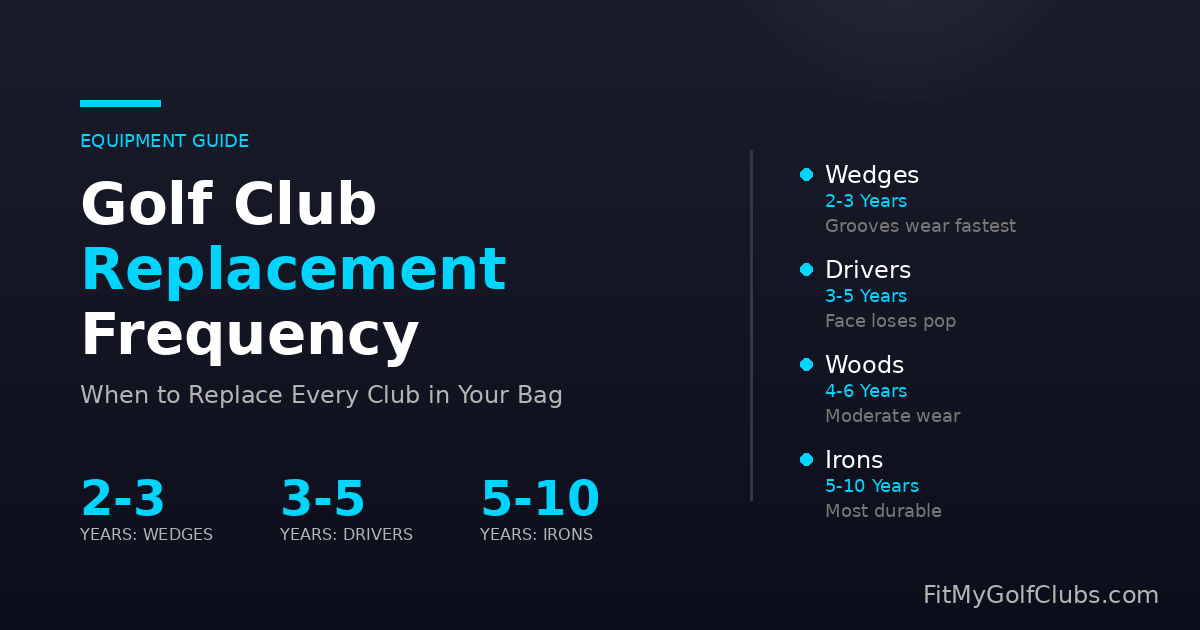
Drivers are often the first clubs that golfers think about replacing. Typically, a driver lasts about 3-5 years, depending on how often you play. If you’re seeing a drop in distance or consistency, it might be time to upgrade.
Irons, on the other hand, can last longer—usually around 5-7 years. However, if you notice that your shots are becoming less accurate, it could be a sign that the grooves are worn out. You want to make sure you’re getting the most out of your investment.
Wedges and Putters
Wedges typically have a shorter lifespan, around 2-4 years, due to their frequent use and the nature of their design. The more you use them, the quicker the grooves can wear down, affecting your spin and control. If you’re not able to get the same bite on the ball that you used to, it might be time for a new wedge.
Putters are a bit different. They can last for a long time, sometimes over a decade, if you’re not experiencing any issues with feel or alignment. However, if you find yourself missing putts you used to make, consider testing out a new model.
Hybrid and Utility Clubs
Hybrid clubs are a fantastic blend of iron and wood, designed to be versatile. They generally have a lifespan similar to that of irons, around 5-7 years. If you notice you’re not getting the same lift or distance, it could be a sign that it’s time for a change.
Utility clubs often see less wear since they’re used less frequently. They can last a long time, but if your game evolves and you find you need different lofts or designs, don’t hesitate to explore new options.
Ultimately, understanding how often you should replace golf clubs can enhance your performance on the course. Keep an eye on your equipment, and trust your instincts—if something feels off, it’s likely time for an upgrade.
When you start thinking about replacing your golf clubs, your budget plays a crucial role in that decision. It’s not just about how often you should replace golf clubs, but also how much you’re willing to spend on new gear.

Budget Considerations for Replacement
Your budget can significantly impact when you decide to upgrade your clubs. While newer clubs often promise better performance, you need to weigh that against the cost of new gear.
New golf clubs can range from a couple of hundred to several thousand dollars. If you’re looking to improve your game, you might be tempted by the latest technology. But ask yourself: will the performance gain justify the expense? Sometimes, a well-maintained set of clubs can still serve you well, especially if you’re not playing at a high competitive level.
Another option to consider is trade-in programs. Many retailers will give you credit for your old clubs, which can help offset the cost of new ones. Just be sure to research the trade-in value beforehand to understand how much you’ll actually save. For example, if you’re trading in an old driver, you might get a discount that makes that shiny new model more affordable.
Timing your purchase can also save you money. Golf clubs often go on sale during major holidays or at the end of the season. If you can wait until then, you might find a great deal on a set of clubs that will elevate your game. Don’t hesitate to explore clearance sections or online sales as well.
Finally, consider whether you really need a complete set or if you can simply replace a few key clubs. Sometimes just upgrading your driver or putter can make a world of difference without breaking the bank. Invest wisely, and you’ll find that you can improve your game without draining your wallet.
Keep an eye out for sales and trade-in opportunities to make your budget stretch further. You’ll be surprised at how many options are available if you take the time to look around.