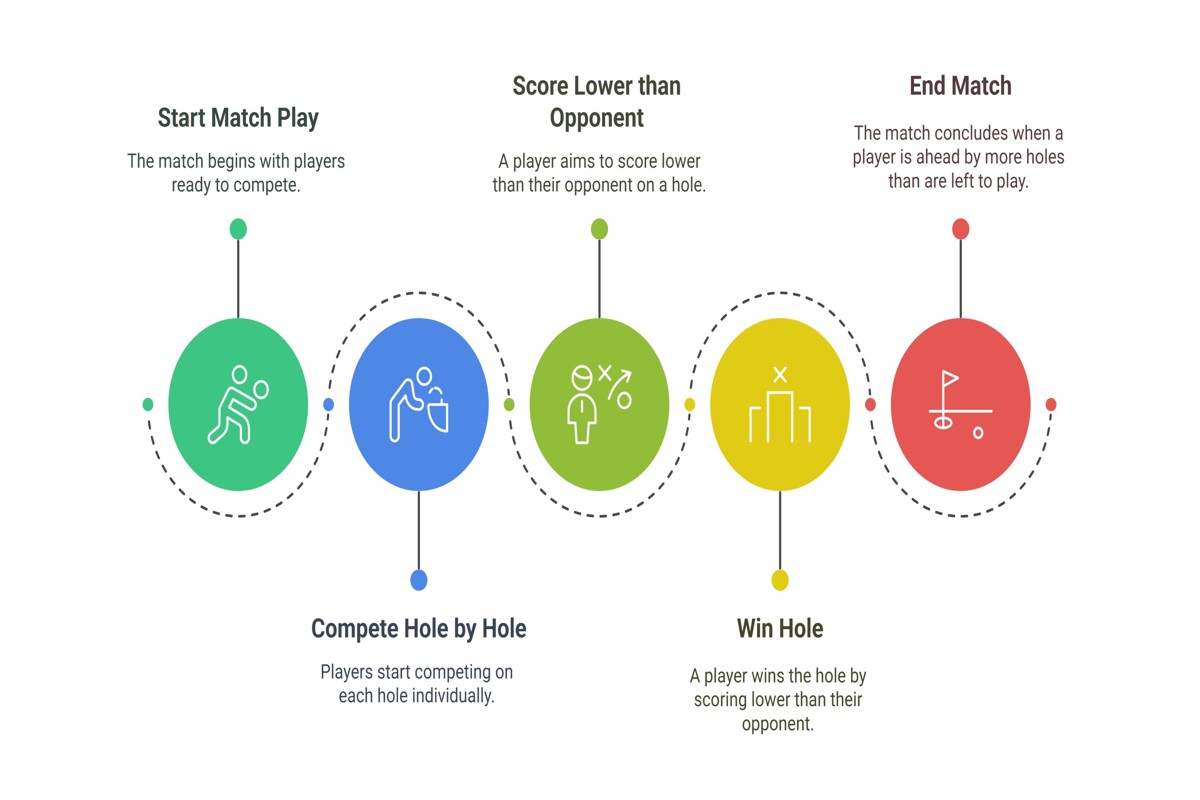
What is match play vs stroke play? Match play is a scoring system in golf where players compete hole by hole, while stroke play counts the total number of strokes taken over the entire course. Understanding these formats is essential for golfers to choose the right style for their game.
For example, in match play, a player can win a hole even if they take more strokes overall, focusing on defeating their opponent one hole at a time. In contrast, stroke play emphasizes overall consistency across all holes.
Match play is one of the two primary formats in golf, differing significantly from stroke play. In match play, the objective is to win individual holes rather than accumulate the lowest overall score.

Understanding Match Play
In match play, you compete head-to-head against another player or team. Each hole is its own contest, and the player or team with the lowest score on that hole wins it.
Scoring in match play is straightforward. If you win a hole, you earn a point. If you tie, no points are awarded. The match continues until one player or team has won more holes than the other can possibly win, effectively ending the competition early. For example, if you’re up by three holes with only two holes left, you’ve already clinched the match.
There are various formats for match play, including singles, doubles (also known as four-ball), and team competitions. Popular tournaments like the Ryder Cup and the WGC-Dell Technologies Match Play showcase the excitement and strategy of match play, attracting fans and players alike.
Whether you’re a beginner or a seasoned golfer, understanding match play can enhance your game and strategy. Next time you’re on the course, consider trying it out with friends for a fun twist on traditional golf scoring.
Stroke play is one of the most common formats in golf, and understanding it is key to enjoying the game. In this format, every stroke counts, and the player with the lowest total score wins.
Understanding Stroke Play
In stroke play, each player competes to complete the course in the fewest number of strokes. This scoring method is straightforward and widely adopted in both amateur and professional golf.
When you play stroke play, you count every shot you take, from teeing off to sinking the final putt. At the end of the round, all your strokes are totaled, and the player with the lowest score is declared the winner. This method emphasizes consistency and skill over individual hole performance.
Stroke play is typically used in tournaments and competitions. For example, during major championships like The Masters or U.S. Open, players compete in stroke play formats where their total strokes over four rounds determine the champion. This format allows players to strategize their play over the entire course.
In contrast to match play, where you’re focused on beating just one opponent, stroke play has you competing against the entire field. This makes for a different kind of pressure and strategy. You might find yourself adjusting your game based on how others are performing, rather than just focusing on your opponent.
Whether you’re a beginner or a seasoned golfer, knowing how to play stroke play helps you better appreciate the game’s nuances. So next time you hit the course, remember that every stroke counts, and play with that mindset!
When it comes to golf, understanding the difference between match play and stroke play can significantly impact your game. Each format has its own unique scoring system, strategies, and psychological components that can affect how you approach each round.
Key Differences Between Match Play and Stroke Play
Match play and stroke play are two distinct formats that shape how you score and compete. In match play, you compete hole by hole, while stroke play involves counting the total number of strokes taken over the entire round. This fundamental difference leads to varied strategies and mindsets during gameplay.
One of the most notable differences is the scoring system. In match play, the goal is to win more holes than your opponent. For example, if you win a hole, you go one up. You can even lose a few holes and still win the match if you win more overall. In contrast, stroke play requires you to minimize your total strokes. Every stroke counts, making it crucial to maintain consistency throughout the round.
Player Strategy Variations
Your strategy will vary greatly depending on the format. In match play, you might take more risks to win a hole, especially if you’re behind. You could go for that aggressive shot over water, knowing that a single hole loss won’t end your game. On the other hand, stroke play encourages a more conservative approach, as every mistake can add up over 18 holes.
Psychological Aspects of Each Format
The psychological dynamics are also different in each format. In match play, the pressure is on both players as they try to outmaneuver each other hole by hole. You might find yourself playing mind games, trying to get into your opponent’s head. With stroke play, the focus shifts inward. You’re competing against your own score, which can lead to pressure that builds throughout the round.
For instance, if you’re playing a match against a friend and you lose the first three holes, you might feel the need to take more aggressive risks to catch up. However, in a stroke play scenario, you’d focus on your overall score, trying to keep it as low as possible, even if you start off poorly.
Understanding these differences can help you choose the right approach for your game. Whether you prefer the head-to-head challenge of match play or the consistency required in stroke play, knowing what to expect can enhance your performance and enjoyment on the course.
Choosing between match play and stroke play can shape your golfing experience. Each format has its own charm and suits different scenarios and player preferences.

When to Use Match Play vs Stroke Play
Understanding when to use each format can enhance your game and your enjoyment on the course. Match play is great for head-to-head challenges, while stroke play is often preferred for competitive tournaments.
Match play shines in casual settings or friendly competitions. If you’re looking for a fun way to challenge a friend, this format lets you focus on individual holes rather than the overall score. For example, if you and a buddy are playing a friendly round, consider match play for a lively competition where every hole counts.
On the other hand, stroke play is the go-to format for most tournaments. It encourages consistency across all 18 holes, making it a true test of skill. In a tournament setting, your total strokes count, and that’s how winners are determined. This format tends to level the playing field, rewarding the player who can maintain performance over the entire round.
Your personal preferences and skill level also play a significant role in deciding which format to use. If you’re a beginner, you might find match play less intimidating. It allows you to focus on one hole at a time, which can be more enjoyable and less stressful. Conversely, if you’re more experienced and looking for a rigorous challenge, stroke play might be more appealing.
Ultimately, both formats have their place in the game. Whether you’re playing for fun or competing for a title, knowing when to use match play vs stroke play can lead to a more satisfying experience. So, next time you hit the course, think about what you want out of the round and pick the format that suits your mood and skill level best.
When it comes to golf, the format you play can drastically change the experience. Understanding the famous tournaments that utilize match play and stroke play helps you appreciate the nuances between the two.
Famous Tournaments Featuring Each Format
Different tournaments showcase the unique features of match play and stroke play. Each format has its own hallmark events that highlight competitive spirit and strategy.
The Masters Tournament is a shining example of stroke play. Held annually at Augusta National Golf Club, this prestigious event allows golfers to compete over four rounds, with the lowest total score winning the coveted green jacket. The excitement builds as players navigate the challenging course, often leading to thrilling finishes.
On the other hand, the Ryder Cup is one of the most celebrated match play tournaments. This biennial contest pits teams from Europe and the United States against each other in a series of head-to-head matches. The atmosphere is electric, with players and fans alike rallying behind their teams, making for a truly unforgettable experience.
Other Significant Events
There are plenty of other events worth mentioning in both formats. For stroke play, you can’t overlook the U.S. Open and The Open Championship, both of which test golfers’ skills over multiple rounds and often feature dramatic moments. In the realm of match play, the WGC-Dell Technologies Match Play Tournament showcases the best in head-to-head competition, where each match can lead to surprising upsets.
Understanding these tournament formats can enhance your appreciation for the game. Whether you’re watching the Masters’ dramatic finishes or the Ryder Cup’s intense rivalries, each tournament brings its own flavor to the world of golf. So, next time you’re tuning in, think about what makes each format unique.
Mastering both match play and stroke play can elevate your golf game significantly. Each format requires unique strategies and mental approaches, so understanding how to adapt is key.
Tips for Mastering Both Formats
Whether you’re battling your buddy in a friendly match or competing in a stroke play tournament, having the right strategies can set you apart. Here are some practical tips to enhance your performance in both formats.
First, adapting your game strategy is crucial. In match play, you might take more risks since you’re playing directly against an opponent. For instance, if your opponent is struggling with their driver, you might decide to go for the green in two shots, putting pressure on them. In stroke play, however, consistency is key. Focus on minimizing mistakes and playing to your strengths.
Mental Preparation Techniques
Your mental game is just as important as your physical skills. In match play, visualize winning scenarios to boost your confidence. Picture yourself sinking that crucial putt to win the hole. For stroke play, practicing mindfulness can help you stay focused on each shot without getting overwhelmed by the overall score.
Practice Drills for Each Format
Incorporate specific drills into your practice routine. For match play, set up head-to-head challenges with friends to simulate pressure situations. Play “closest to the pin” contests to sharpen your short game under pressure. For stroke play, focus on your overall consistency. Work on hitting a set number of fairways and greens in regulation during practice rounds. This will help you build confidence when you’re out on the course.
One practical tip? Always keep your eye on the prize, whether it’s winning the match or achieving a personal best score. Remember, each format offers its unique challenges and rewards, so embrace the differences and let them enhance your game.